
Spatial Catalyst
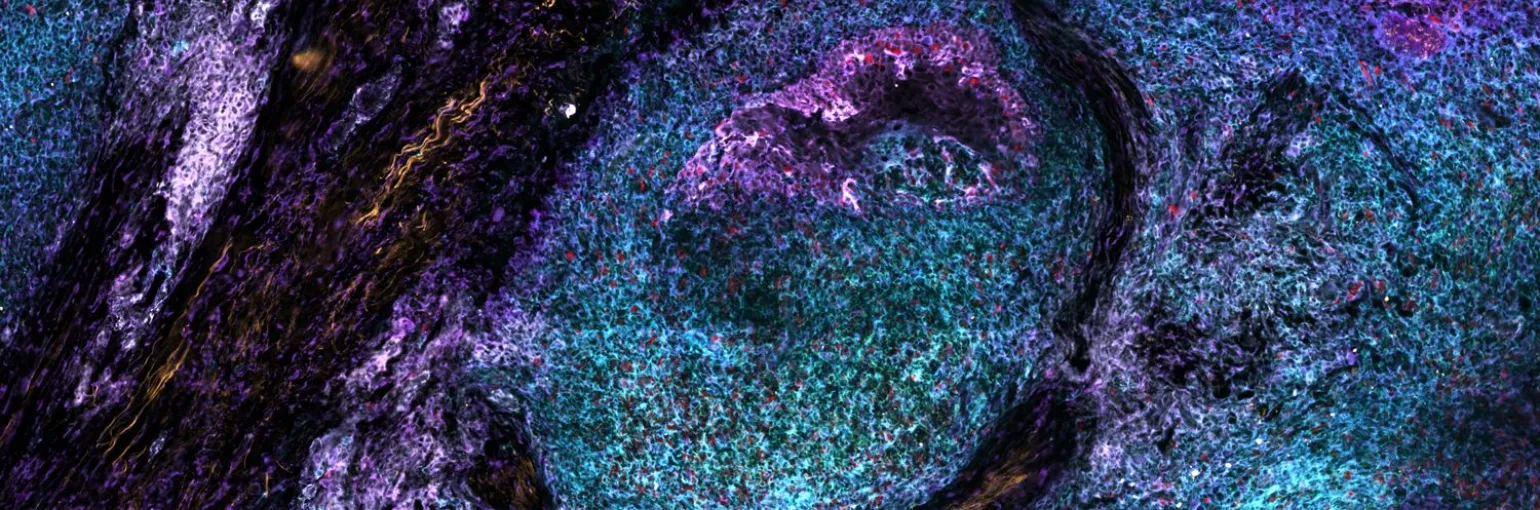
Your Gateway to Spatial Omics Expertise
VIB Spatial Catalyst is set up to advance the application of spatial technologies by bringing together expertise and providing support for spatial omics experiments, data analysis and developing bioinformatics tools. Join us in revolutionizing spatial technology applications!
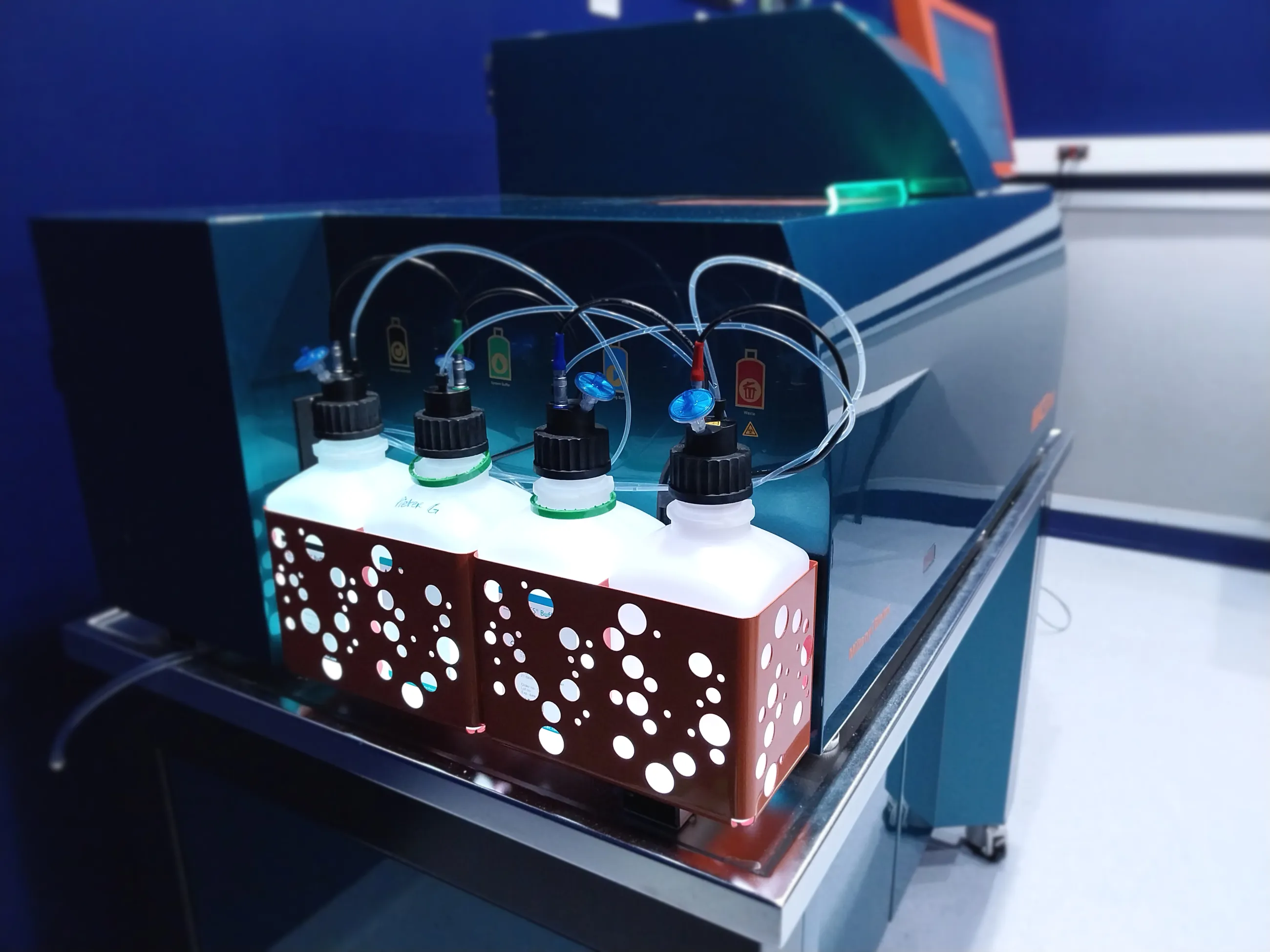
VIB's Spatial Technologies
VIB hosts several cutting-edge spatial technologies in the fields of spatial transcriptomics, proteomics and metabolomics and we offer guidance in selecting the right experimental approach to address your scientific question. Besides our own VIB researchers, we also offer our expertise and devices to other academic and industrial users. Do not hesitate to contact us using the link on the bottom of this page to discuss your project.
Empower Your Spatial Exploration: Tailored Support and Guidance

Consultancy
We offer consultancy in the field of spatial technologies and can support you with insights into the latest developments in spatial omics, selecting the right experimental approach for your scientific question, provide input for upcoming grant applications and give advice on anything ranging from small questions to large-scale projects.

Services
In close collaboration with VIB colleagues in the research centers, expertise units, Tech Watch and the VIB core facilities, we are streamlining the acquisition and analysis of spatial data and are already offering several devices in service.

Data Analysis
Our Spatial Catalyst bioinformaticians offer guidance and hands-on assistance to determine the best approach for your spatial data. We advise and train you in the use of established analysis pipelines and tools or guide you towards tailored solutions that fit your research questions.

Training
Our goal is to make the spatial field accessible to everyone and foster a spatial community with a collaborative mindset. To achieve this, we organize a variety of training opportunities ranging from data acquisition to data analysis.

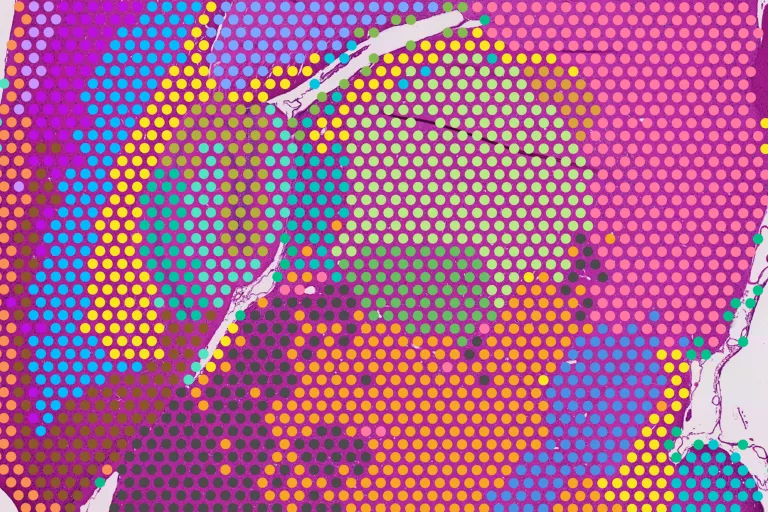
Spatial Transcriptomics
Interested in studying mRNA within its spatial context? Our expertise extends to both targeted ( Xenium, MERSCOPE, & RNAscope) and untargeted spatial transcriptomics (Visium, Visium HD, StereoSeq, & Curio Seeker).”
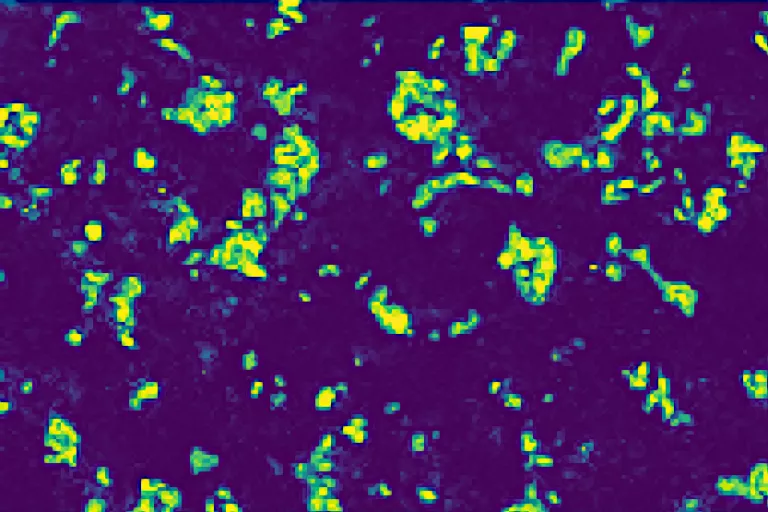
Spatial Metabolomics
Does your research require spatially-resolved metabolites or lipids? Work with the VIB Spatial Catalyst and Metabolomics Core Leuven to enhance your research with our cutting-edge technologies: timsTOF fleX MALDI-2, DESI-XS MRT & Scimax MR-MS.
Spatial Proteomics
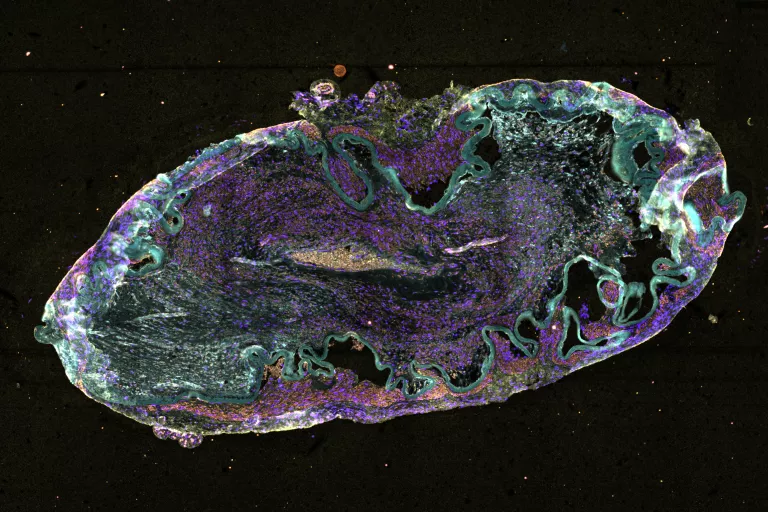
Are you fascinated by exploring high-plex protein expression and localization? Our expertise extends to state-of-the-art devices such as MACSima, PhenoCycler Fusion, & Opal, enabling us to provide comprehensive solutions for your research needs.
Press & Publications

Benchmarking targeted spatial transcriptomics technologies (conference poster 14/7/2024)
In recent years, targeted spatial transcriptomics technologies have become increasingly accessible with the advent of commercial platforms like Xenium (10X Genomics), MERSCOPE (Vizgen), Molecular Cartography (Resolve Biosciences), and CosMx SMI (NanoString). While these imaging-based platforms offer tantalizing opportunities for researchers by providing the spatial context of an extensive gene expression panel with subcellular resolution, it has long remained unclear how these technologies compare in terms of technical performance and user experience.
Spatial Omics: understanding life in 3D
Recent advances in the life sciences have given researchers increasingly detailed insights into the molecular mechanisms underlying health and disease. One thing, however, is missing: the spatial dimension. Spatial omics seeks to remedy this and VIB has invested in this suite of technologies since it burst on the scene. But what is spatial omics, and what are the challenges that remain?

Conversations with experts: the art of Spatial Omics
In anticipation of the upcoming Spatial Omics Conference June 2024, we had the pleasure of speaking with two experts and organizing committee members. The first is Johan Swinnen, head of the Laboratory of Lipid Metabolism and Cancer at KU Leuven. The other expert is Evelien Van Hamme, who leads the VIB Spatial Catalyst at VIB. Each, in their own way, is an expert in spatial omics, a technique that is transforming our understanding of biological tissues.
A TCF4-dependent gene regulatory network confers resistance to immunotherapy in melanoma
Researchers of the VIB Marine lab investigated intrinsic resistance to immune checkpoint blockade (ICB) in melanoma. Using single-cell, spatial multi-omics techniques, they analysed the cellular architecture of treatment-naive melanoma. Melanoma cells with a mesenchymal-like (MES) state, associated with therapy resistance, were enriched in non-responders’ early on-treatment biopsies. The central regulator TCF4 suppresses melanocytic and antigen presentation programs while orchestrating multiple transcriptional processes, contributing to resistance to both targeted therapy and ICB in melanoma.
VIB Spatial Catalyst capitalizes on diverse omics talent to professionalize spatial technology activities
Spatial omics technologies are an emerging discipline in scientific research that have been steadily gaining importance over the past few years. Building on VIB Technologies’ broad range of technological expertise, VIB is leveraging spatial technologies through its new Spatial Catalyst unit. In doing so, the organization hopes to make spatial technologies more accessible, integrating it in all layers of its research activities.

Our Team
"The ambition of the Spatial Catalyst is to make spatial technologies accessible to all our scientists. We want to map out, reinforce and promote the use of our existing infrastructure and expertise in this area to aid scientists in leveraging the technology for their research. We already have some very nice proofpoints of how VIB has leveraged spatial technologies in the past, showing just how well it can contribute to breakthrough science. That’s why this is such an important ambition for us."
(Evelien Van Hamme)
Ready to embark on your spatial journey?
Get in touch with us to discover how VIB Spatial Catalyst can elevate your research to new heights. Together, we can unravel the secrets hidden within the spatial dimension of biological systems.
