
Modalities
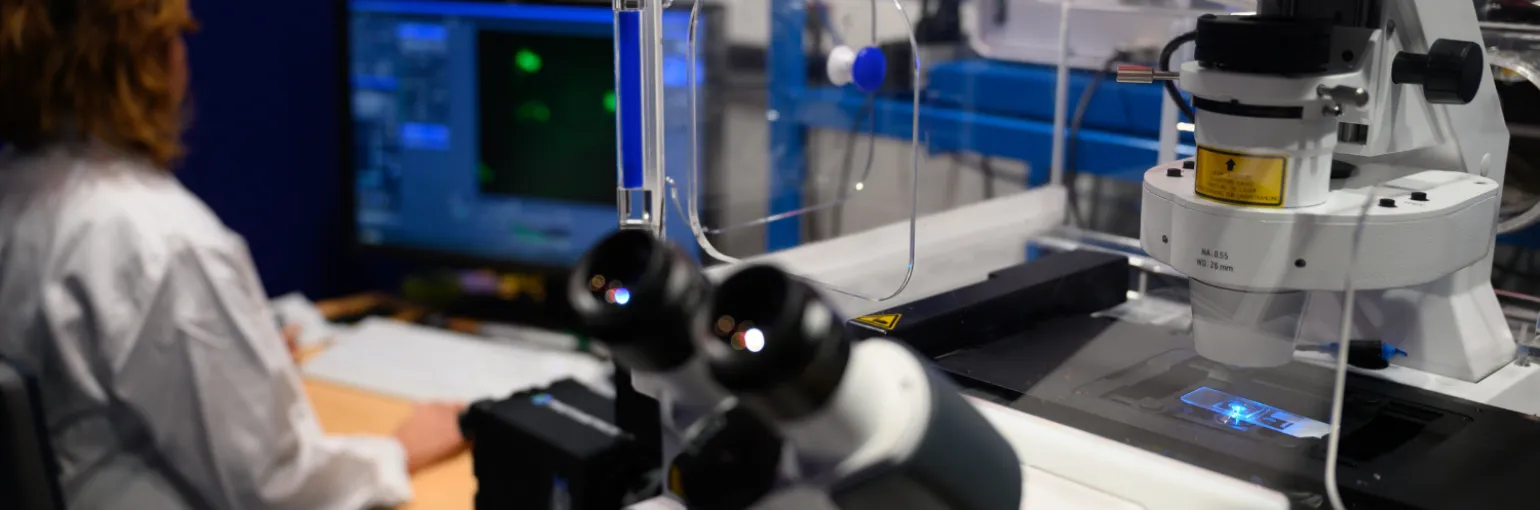
What is the VIB Grand Challenges Program?
Learn more about the VIB Grand Challenges Program in this short video!
What defines a VIB Grand Challenges Project?
While each Grand Challenges project applies a specific scientific approach, all projects share important characteristics: collaboration both within VIB and with external partners to guarantee an interdisciplinary approach, strong translational focus aimed at generating significant societal impact, involvement of different stakeholders and management by several principal investigators. Moreover, all project partners are encouraged to implement a sustainability in their work plan.

Joining forces beyond borders: interdisciplinarity
Interdisciplinary collaborations go outside the boundaries of traditional collaborations among ‘basic’ scientists. Collaborations with clinical groups, applied agronomists, technology development specialists, engineers, … are considered interdisciplinary. Projects strive for transdisciplinarity by taking actors from civil society on board (patients/patient organisations, farmers/farming organisations, consumers,...).
Knowledgeable stakeholder involvement and engagement is mandatory, e.g. with patient group representatives, investors, developing world experts, health economists and/or policy experts. Maximum 50% of the funding is to be allocated to VIB groups and min 50% to non-VIB groups.

Projects are translational with a clear value creation potential
The intention of the program is to team up with non-VIB research groups which have complementary expertise, knowledge and technology required for the successful execution of a VIB Grand Challenges project. Projects start from an unmet societal need, for which solutions are identified during the project's lifetime. These results are further developed into outcomes to generate long-term societal impact.
VIB Grand Challenges projects beyond proof-of-principle might fit within the Program if they can balance out short-term deliverables with longer term societal impact. A minimum of proof-of-principle data is required, demonstrating the feasibility of the project. If no data is available, a proof-of-principle phase must be introduced in the research work plan.
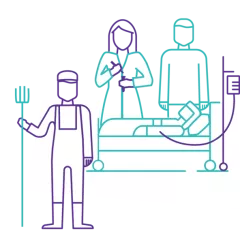
Striving for shared societal impact and (multi)stakeholder engagement & involvement
Projects strive to identify, engage and involve different stakeholders during the project's lifetime. These stakeholders provide valuable insights that contribute to the project results. The VIB-GCP support team is dedicated to supporting the project's stakeholder interaction activities in collaboration with the project partners.

Projects have no alternative funding perspectives, but should explore leverage funding opportunities
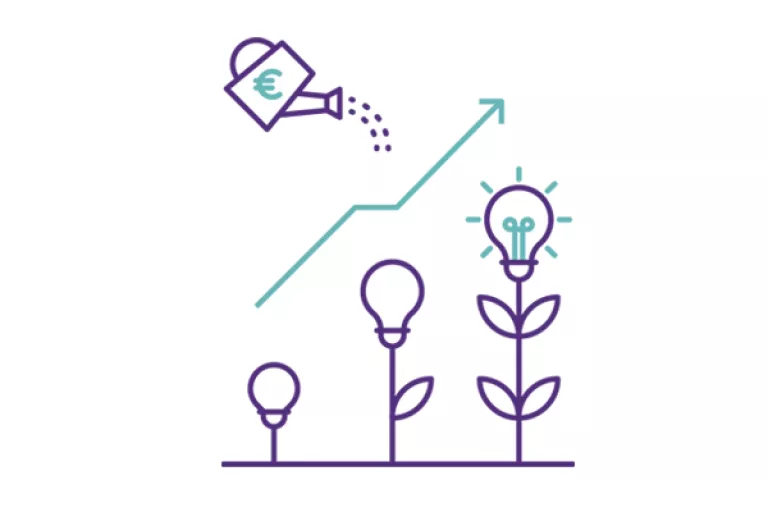
VIB-GCP can only fund projects that have no alternative funding options, and should as such be considered as 'gap funding'.
Achieving additional (leverage) funding during the project's lifetime is key for a successful project, including but certainly not limited to spill-over to both classical and more dedicated funding applications.
Calls for projects
All project applications go through a dedicated application- and review procedure:
- In the past six years, VIB-GCP has organised five calls for projects and one thematic COVID-19 call during the pandemic. In each of these calls, two to three projects have been selected.
- Call 6 was opened in June 2024. Projects go through a pre-application phase with a first deadline in September, followed by co-creation workshops to optimize the fit of the projects. The final submission deadline is in December, with the announcements of the results expected in June 2025.
- Project applications are evaluated in a 2-step procedure: a written review with involvement of external experts (scientific- and translational experts) and a live interview by an expert panel that ranks the different projects. VIB's board of directors makes the final decision.
Acknowledging VIB-GCP
If a project was funded by VIB-GCP, the Program should be acknowledged in the following way:
This project has received funding within the Grand Challenges Program of VIB.
Optional: This VIB Program received support from the Flemish Government under the Management Agreement 2022-2026 (VR 2021 1712 DOC. 1492/4).